
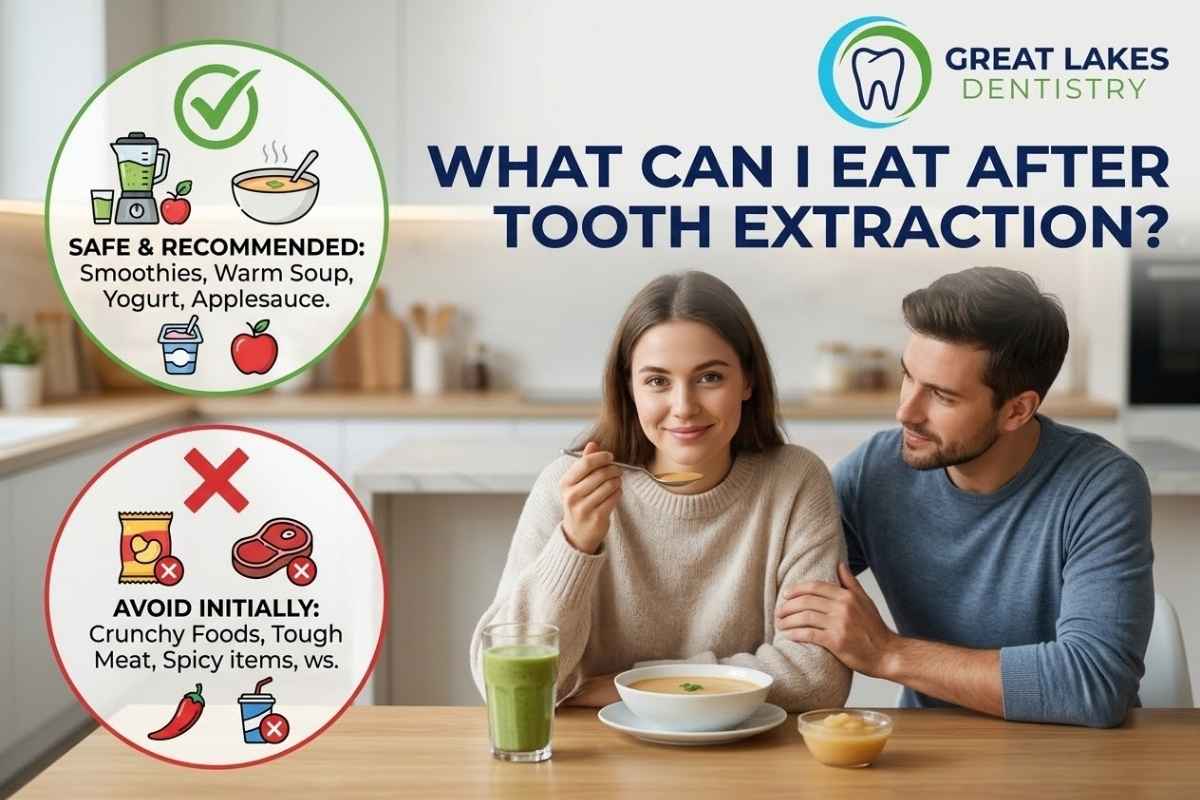
Choosing the right foods after tooth extraction protects the healing site and speeds up recovery
What Can I Eat After Tooth Extraction? A Practical Soft-Food Guide for Healing
Recovering from a tooth extraction involves more than rest. The foods you choose during healing can mean the difference between a smooth recovery and painful complications like dry socket.
What Can I Eat After Tooth Extraction?
After a tooth extraction, it is best to eat soft foods that are easy to chew and swallow. These foods reduce pressure on the healing area and help prevent irritation to the surrounding gum tissue.
Common soft foods recommended after tooth removal include:
- Yogurt
- Mashed potatoes
- Scrambled eggs
- Applesauce
- Smoothies (without a straw)
- Soft oatmeal
- Warm soups and broths
These foods are gentle on the gums while still providing the nutrients your body needs to heal efficiently. Patients at Great Lakes Dentistry in Oakville, Ontario receive detailed aftercare instructions that include guidance on safe food choices from day one.
Why Soft Foods Matter After Tooth Extraction
When a tooth is removed, the body forms a protective blood clot inside the extraction socket. This clot covers the bone and nerves underneath and supports the healing of surrounding tissue. Eating inappropriate foods too early can:
- Dislodge the protective clot
- Cause bleeding or irritation
- Increase discomfort during recovery
- Raise the risk of dry socket
According to the Canadian Dental Association, following proper post-extraction care — including diet — significantly reduces the risk of complications and supports faster healing.
Best Foods to Eat After Tooth Extraction
Selecting gentle foods during recovery makes eating more comfortable while protecting the extraction site. Here are the top recommended options.
Yogurt
Yogurt is one of the easiest foods to eat after dental surgery. Its smooth texture requires no chewing, making it ideal during the first day of recovery.
Benefits of Yogurt After Extraction
- High protein content that supports tissue repair
- Calcium that contributes to oral health
- Cool texture that helps soothe sensitive gums
Plain or lightly flavored yogurt works best during early recovery.
Mashed Potatoes
Mashed potatoes are soft, filling, and easy to swallow. They provide carbohydrates that help maintain energy while the body heals. Because they require little to no chewing, mashed potatoes are consistently listed among the best foods to eat after tooth extraction. Allow them to cool slightly before eating, as very hot foods may irritate the healing socket.
Smoothies
Smoothies are a convenient way to maintain nutrition during recovery. Blended drinks can include bananas, yogurt, milk, or soft fruits — providing vitamins and energy in an easy-to-consume form. One critical precaution: avoid using a straw. The suction can dislodge the healing clot and lead to dry socket. For more post-extraction guidance, visit the Government of Canada’s dental care resources.
Scrambled Eggs
Scrambled eggs are soft, nutrient-rich, and easy on healing gums. They provide:
- High-quality protein that supports tissue repair
- Essential vitamins and minerals for healing
- Soft texture that requires minimal chewing
This makes eggs one of the most practical things to eat after tooth extraction throughout the recovery period.
Soup and Broth
Warm soups and broths are easy to consume and help keep the body hydrated. Suitable choices include vegetable soup, chicken broth, and cream-based soups. Always allow soups to cool to a warm or lukewarm temperature before eating. Hot liquids can irritate the socket and disrupt the clot.
Applesauce
Applesauce is a gentle food commonly recommended after dental procedures. Because it requires no chewing, it avoids unnecessary pressure on the extraction site while providing natural sweetness and important nutrients during recovery.
Oatmeal
After the first couple of days, oatmeal can be introduced as a soft and comforting meal. It provides fiber and nutrients while remaining easy to chew. Adding mashed banana or soft fruit keeps the texture gentle while adding flavor.
What to Eat During the First 24 Hours After Tooth Extraction
The first 24 hours are the most sensitive stage of healing. During this period, focus on foods that require little or no chewing.
Safe First-Day Options
Yogurt, applesauce, protein smoothies, mashed potatoes, and soft soups are all ideal. These protect the extraction area while helping the body maintain energy and hydration.
What to Avoid Day One
Avoid anything crunchy, spicy, chewy, or extremely hot. Do not use a straw. Even soft rice may carry risks on the first day due to small particles that can lodge in the socket.
Foods to Avoid After Tooth Extraction
While planning what to eat after tooth extraction, knowing which foods to avoid is equally important. During the first several days, stay away from foods that are:
- Hard or crunchy — chips, nuts, popcorn, raw vegetables
- Sticky — caramel, chewing gum, gummy candies
- Spicy or heavily seasoned
- Extremely hot in temperature
- Alcoholic — alcohol can interfere with healing and medications
- Consumed through a straw
If you are unsure about a specific food during your recovery, the team at Great Lakes Dentistry is available to advise.
Tooth Extraction Recovery Timeline
Healing after tooth extraction occurs gradually. Here is a general timeline of what to expect.
First 24 Hours
The blood clot forms and protects the extraction socket. Soft foods and rest are essential. Avoid rinsing forcefully, spitting, or touching the area with your tongue.
Days Two to Three
Swelling and tenderness begin to decrease. Continue eating soft foods and avoid chewing near the extraction site. Gentle salt water rinses may be recommended by your Oakville dental team.
Days Four to Seven
The gums begin to close around the socket and eating becomes progressively more comfortable. Slightly firmer soft foods such as soft pasta or cooked vegetables can be introduced.
After One Week
Most patients can slowly reintroduce normal foods depending on how well the area has healed. Healing times vary with the type of extraction, so always follow your dentist’s specific aftercare instructions.
Signs of Dry Socket After Tooth Extraction
Dry socket occurs when the blood clot protecting the extraction site becomes dislodged or dissolves prematurely. It is one of the most common complications after tooth removal, but it is preventable with proper care.
Possible Symptoms of Dry Socket:
- Severe pain several days after extraction — often worse than the procedure itself
- A bad taste or unpleasant odor in the mouth
- Pain spreading toward the ear or jaw
- Visible bone inside the socket
If these symptoms occur, contact a dentist immediately for evaluation and treatment.
Tips for Faster Healing After Tooth Extraction
Beyond diet, a few simple habits support recovery after dental extraction in Oakville:
- Eat soft foods for at least three to five days
- Chew on the opposite side of the mouth
- Avoid straws for at least 72 hours
- Drink plenty of water to stay hydrated
- Do not smoke — smoking dramatically increases dry socket risk
- Avoid vigorous rinsing or spitting in the first 24 hours
- Follow your dentist’s aftercare instructions exactly
According to Health Canada’s oral health guidelines, following post-procedure instructions from your dental provider is one of the most effective ways to prevent complications and promote healing.
Questions About Your Recovery?
The team at Great Lakes Dentistry in Oakville is here to guide you through every stage of healing — from what to eat to when you can return to normal activities.
Tooth Extraction Care in Oakville, Ontario
At Great Lakes Dentistry, patients recovering from tooth removal in Oakville, Ontario receive detailed aftercare guidance from the moment the procedure is complete. Whether it is a simple extraction or a more involved surgical removal, the same key principle applies: protect the clot, eat gently, and follow professional guidance.
Frequently Asked Questions
What foods help tooth extraction heal faster?
Soft foods such as yogurt, scrambled eggs, mashed potatoes, smoothies, and soups provide essential nutrients while protecting the extraction site. Protein-rich options like eggs and yogurt are especially beneficial for tissue repair.
Can I eat rice after tooth extraction?
Soft rice may be eaten after a few days, but small grains can become trapped in the socket. Many dentists recommend waiting until early healing has occurred before introducing rice or similar small-particle foods.
How long should I eat soft foods after tooth extraction?
Most patients follow a soft-food diet for three to five days. Healing time can vary depending on the type of extraction — surgical extractions such as wisdom tooth removal may require a longer soft-food period.
Can I drink coffee after tooth extraction?
Hot coffee should be avoided during the first 24 hours as heat may interfere with the healing blood clot. After the initial period, lukewarm coffee is generally acceptable, but avoid consuming it through a straw.
When should I contact a dentist after tooth extraction?
Contact your dentist if you experience severe pain that worsens after two or three days, persistent bleeding beyond 24 hours, swelling that gets worse rather than better, or any signs of infection. You can reach the Great Lakes Dentistry team in Oakville anytime with post-extraction concerns.
Understanding Coverage & Patient Support
Canada Dental Care Plan (CDCP)
Eligible patients may receive coverage for necessary dental treatments, including extractions, through the Canada Dental Care Plan (CDCP). Contact our office to verify your eligibility and coverage details.
Health Information Resources
For reliable oral health and post-extraction guidance:
Health Canada — Dental Care Information
Canadian Dental Association — Oral Health Resources
These organizations provide evidence-based dental care recommendations for Canadians.
Final Thoughts
Key Takeaways for a Smooth Recovery:
- Eat soft foods for at least three to five days after extraction
- Never use a straw during the healing period
- Avoid hot, crunchy, sticky, or spicy foods
- Watch for signs of dry socket and contact your dentist if concerned
- Follow your dentist’s aftercare instructions for the best outcome