
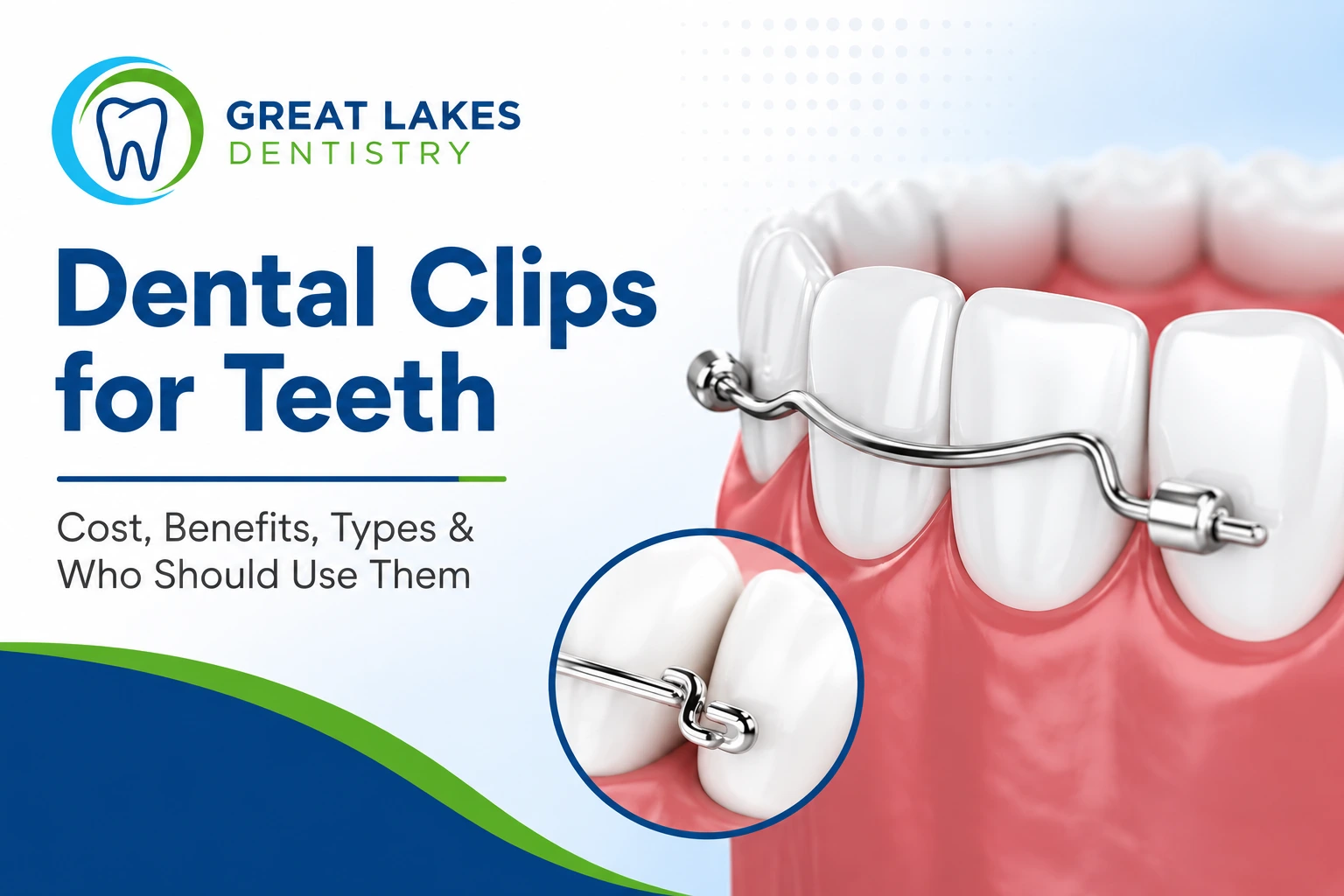
Dental clips serve a wide range of functions — from straightening teeth to securing dentures and retaining orthodontic results
Dental Clips for Teeth: Cost, Benefits, Types & Who Should Use Them
The term dental clips for teeth covers several different dental devices — from the small brackets and ties used in traditional braces, to the precision clasps that hold partial dentures in place, to the retainer clips that preserve orthodontic results after treatment. Understanding which type of dental clip applies to your situation, what it costs, and who genuinely benefits from it can help you have a much more informed conversation with your dentist before committing to any treatment.
What Are Dental Clips for Teeth?
In everyday conversation, “dental clips” is used loosely to describe several different types of dental hardware. Clinically, they fall into three main categories:
- Orthodontic brackets and clips — the small metal or ceramic fixtures bonded to teeth during braces treatment, used to hold the archwire in place and guide tooth movement
- Partial denture clasps — metal or tooth-coloured hooks that clip onto natural teeth to hold a removable partial denture securely in position
- Retainer clips — wire or clear components that hold orthodontic retainers in place after braces or Invisalign treatment, preventing teeth from shifting back
Each type serves a distinct clinical purpose, is used at a different stage of dental care, and comes with its own cost range, benefits, and candidacy requirements. Let’s examine each in detail.
Type 1: Orthodontic Brackets and Clips (Braces)
What They Are
Orthodontic brackets — commonly called braces clips — are small squares of metal or ceramic that are bonded directly to the surface of each tooth. An archwire is then threaded through each bracket and secured with tiny elastic ties or, in self-ligating systems, a built-in metal clip. Together, the brackets and wire apply controlled pressure to gradually move teeth into their correct positions.
Types of Orthodontic Brackets
- Metal brackets — the most common and most affordable option. Highly durable and effective for all types of misalignment
- Ceramic brackets — tooth-coloured for improved aesthetics. Less visible than metal but slightly more fragile and typically more expensive
- Self-ligating brackets — incorporate a built-in sliding clip instead of elastic ties, reducing friction and potentially shortening treatment time
- Lingual brackets — bonded to the inside surface of teeth for a completely invisible appearance, though more complex to place and adjust
Who Should Use Orthodontic Clips
Orthodontic brackets are appropriate for patients with crowding, spacing, overbites, underbites, crossbites, or open bites that require precise tooth-level control. They are suitable for both teens and adults. Patients who cannot maintain the 20 to 22 daily hours required by clear aligners like Invisalign may find fixed braces with brackets a more reliable option.
Cost of Orthodontic Brackets in Canada
The cost of traditional braces in. Ceramic and lingual brackets sit at the higher end of this range. Some dental insurance plans provide partial orthodontic coverage — your Great Lakes Dentistry team can help verify your benefits before treatment begins.
Type 2: Partial Denture Clasps (Removable Partial Denture Clips)
What They Are
When a patient has lost several but not all of their natural teeth, a removable partial denture is one option to fill in the gaps. Partial dentures are held in place using clasps — metal arms that wrap around and clip onto adjacent natural teeth for retention.
These clasps are typically made from:
- Cast metal (cobalt-chromium) — the most common material. Strong, thin, and durable, but visible as a silver clasp on tooth surfaces
- Flexible thermoplastic (Valplast) — a tooth-coloured, gum-coloured clasp option that blends with surrounding tissue for a more aesthetic result
- Precision attachments — internal clips built into dental crowns on adjacent teeth, providing retention without visible metal clasps. The most aesthetic option, though also the most expensive
Who Should Use Partial Denture Clasps
Partial dentures with clasps are a viable option for patients who:
- Have lost multiple teeth but retain some healthy natural teeth
- Are not candidates for dental implants due to bone loss, health conditions, or budget
- Prefer a non-surgical, removable tooth replacement solution
- Need a temporary restoration while planning for a longer-term solution
Type 3: Retainer Clips (Post-Orthodontic Retaining Devices)
What They Are
Once braces or Invisalign treatment is complete, teeth need to be held in their new positions while the surrounding bone and periodontal fibres stabilize. This is the role of retainers — and the clips or wires that form part of their structure are what patients commonly refer to as dental retainer clips.
Retainers come in two main forms:
- Hawley retainers — a removable acrylic plate with a wire clip that sits across the front teeth. Durable, adjustable, and long-lasting with proper care
- Fixed (bonded) retainers — a thin wire bonded directly to the back surfaces of the front teeth, providing permanent passive retention without any removable component. Especially effective for patients at higher risk of relapse
- Clear (Essix) retainers — a moulded clear plastic tray with no visible clip component. Aesthetically preferred but must be replaced every 1 to 3 years
Who Should Use Retainer Clips
Every patient who has completed orthodontic treatment — whether with traditional braces or Invisalign — requires retainers. Without them, teeth will shift. The type of retainer recommended depends on:
- The nature of the original misalignment (underbite, crowding, spacing)
- Compliance history during active orthodontic treatment
- Patient preference for fixed versus removable
- Whether lower incisor crowding is likely to recur
Dental Clips vs. Clear Aligners: Which Is Right for You?
For orthodontic correction specifically, patients often ask whether traditional brackets and clips or clear aligners like Invisalign better suit their needs. Here’s a quick comparison:
Orthodontic Clips (Braces)
Fixed to teeth — no compliance requirement. Highly precise for complex movements. Suitable for all severity levels. Visible during treatment. No dietary freedom. Suitable for all ages. Often slightly lower cost for complex cases.
Clear Aligners (Invisalign)
Removable — requires 20–22 hours daily discipline. Nearly invisible during treatment. Excellent for mild to moderate cases. Eat and drink freely. No metal or wire irritation. Preferred by most teens and adults. Increasingly effective for complex cases with attachments.
Benefits of Dental Clips: A Summary Across All Types
Despite serving different purposes, all three categories of dental clips share a set of meaningful clinical benefits:
- Precision control — each type provides a controlled, specific mechanical action on the tooth or prosthesis it engages
- Predictable outcomes — when properly fitted by an experienced clinician, dental clips deliver consistent, measurable results
- Minimally invasive — brackets, clasps, and retainer wires preserve tooth structure without requiring significant removal of healthy enamel
- Long-term durability — quality dental clips are designed to withstand years of daily use when properly maintained and adjusted
- Reversibility — removable clips and clasps allow patients to trial or adjust their appliance, unlike permanent restorations
According to the Canadian Dental Association, properly fitting orthodontic and prosthetic appliances — including all forms of dental clips — play a central role in long-term oral health outcomes and patient quality of life.
Caring for Teeth With Dental Clips
Regardless of which type of dental clip you have, consistent oral hygiene is essential:
- Orthodontic brackets — use a soft-bristle brush, interdental brushes, and floss threaders to clean around each bracket and under the archwire daily. Plaque buildup around brackets is one of the leading causes of white spot lesions (permanent marks) after braces
- Partial denture clasps — remove the denture nightly, clean it with a denture brush and non-abrasive cleaner, and brush the natural teeth and clasped anchor teeth carefully
- Retainer clips — for removable retainers, brush gently with a soft toothbrush and cool water daily. Soak in retainer cleaning solution. For fixed retainers, use a floss threader or water flosser to clean around the bonded wire nightly
When to See a Dentist About Dental Clips
Book an appointment at Great Lakes Dentistry promptly if you notice:
- A bracket, clasp, or retainer wire that has come loose, broken, or shifted position
- Irritation, sore spots, or cuts to your gums or cheeks from any dental clip
- A partial denture that no longer clips securely — this often indicates changes in the anchor teeth or gum tissue
- Teeth that appear to be moving or have shifted after completing orthodontic treatment
- Pain or discomfort around any clipped or clasped tooth
If you are experiencing an urgent issue with a dental clip or appliance, our emergency dentist team is available to assess and address the problem promptly.
Trusted Resources on Orthodontic and Restorative Dental Appliances
- Canadian Dental Association — Oral Health Resources
- Health Canada — Dental Care Guidelines
- World Health Organisation — Oral Health Facts
Book a Dental Consultation at Great Lakes Dentistry, Oakville
Whether you’re exploring orthodontic brackets, partial denture options, or retainer replacement, Dr. Gurpreet Mohi and our team will help you find the right solution for your smile and budget. Call us at (905) 825-1212 or book online today.
Frequently Asked Questions: Dental Clips for Teeth
What are dental clips for teeth used for?
Dental clips serve three main functions depending on their type: orthodontic brackets and clips move teeth into correct alignment during braces treatment; partial denture clasps hold removable dentures securely onto remaining natural teeth; and retainer clips hold post-orthodontic retaining appliances in place to prevent teeth from shifting after treatment is complete.
Are dental clips painful?
Orthodontic brackets cause mild soreness for a few days after placement or adjustment as teeth begin to move — this is normal. Partial denture clasps may initially feel unfamiliar but should not cause pain when properly fitted. Retainer clips are generally not painful. If any dental clip is causing persistent pain, sharp irritation, or sore spots, contact your dentist to have the appliance checked and adjusted.
Can I eat normally with dental clips on my teeth?
With orthodontic brackets, certain foods should be avoided — particularly hard, sticky, chewy, or crunchy foods that can damage or dislodge brackets or wires. Partial denture clasps allow most foods but very hard or sticky foods should still be approached with care. Retainer clips — whether on removable or fixed retainers — do not restrict diet, though removable retainers should always be taken out before eating.
How do I clean around dental clips and brackets?
For orthodontic brackets, use a soft-bristle toothbrush, interdental brushes, and a floss threader to clean around each bracket and under the archwire after every meal. For partial denture clasps, remove the denture nightly and clean it and the anchor teeth separately. For retainer wire clips, use a soft toothbrush and retainer cleaning solution daily, and a floss threader for fixed bonded wires.
What happens if a dental clip breaks or falls off?
Contact your dentist promptly. A broken orthodontic bracket can affect tooth movement and may cause wire irritation. A dislodged denture clasp affects appliance stability and can stress anchor teeth. A broken retainer wire may allow teeth to shift quickly, particularly in the lower front teeth. Great Lakes Dentistry’s emergency dental team can assess and repair broken clips or appliances without delay.
Are dental clips visible when I smile?
Metal orthodontic brackets are visible during treatment. Ceramic brackets are more discreet. Lingual brackets are hidden on the inside of teeth and completely invisible. Partial denture clasps in cast metal are sometimes visible depending on their position. Flexible thermoplastic clasps and precision attachments are far less noticeable. For orthodontic treatment, clear aligners offer the most aesthetic alternative to visible brackets entirely.
How long do I need to wear dental retainer clips after braces?
Retainers should be worn for life to maintain orthodontic results. In the first 3 to 6 months after treatment, most dentists recommend full-time wear. After that, nightly wear is typically sufficient for most patients. Fixed bonded retainers provide permanent passive retention without any daily compliance requirement, making them an excellent choice for patients at higher risk of relapse.
Final Thoughts
Key Takeaways: Dental Clips for Teeth
- Dental clips span three major categories — orthodontic brackets, partial denture clasps, and retainer clips — each serving a distinct clinical function
- Partial denture clasps place stress on anchor teeth — regular dental checkups and cleanings are essential to monitor anchor tooth health
- Every orthodontic patient needs retainers after treatment — without them, teeth will shift back regardless of how long braces were worn
- Broken or loose dental clips should be assessed by your dentist promptly to avoid complications
- Dr. Gurpreet Mohi at Great Lakes Dentistry can help you determine which type of dental clip is appropriate for your needs and budget