
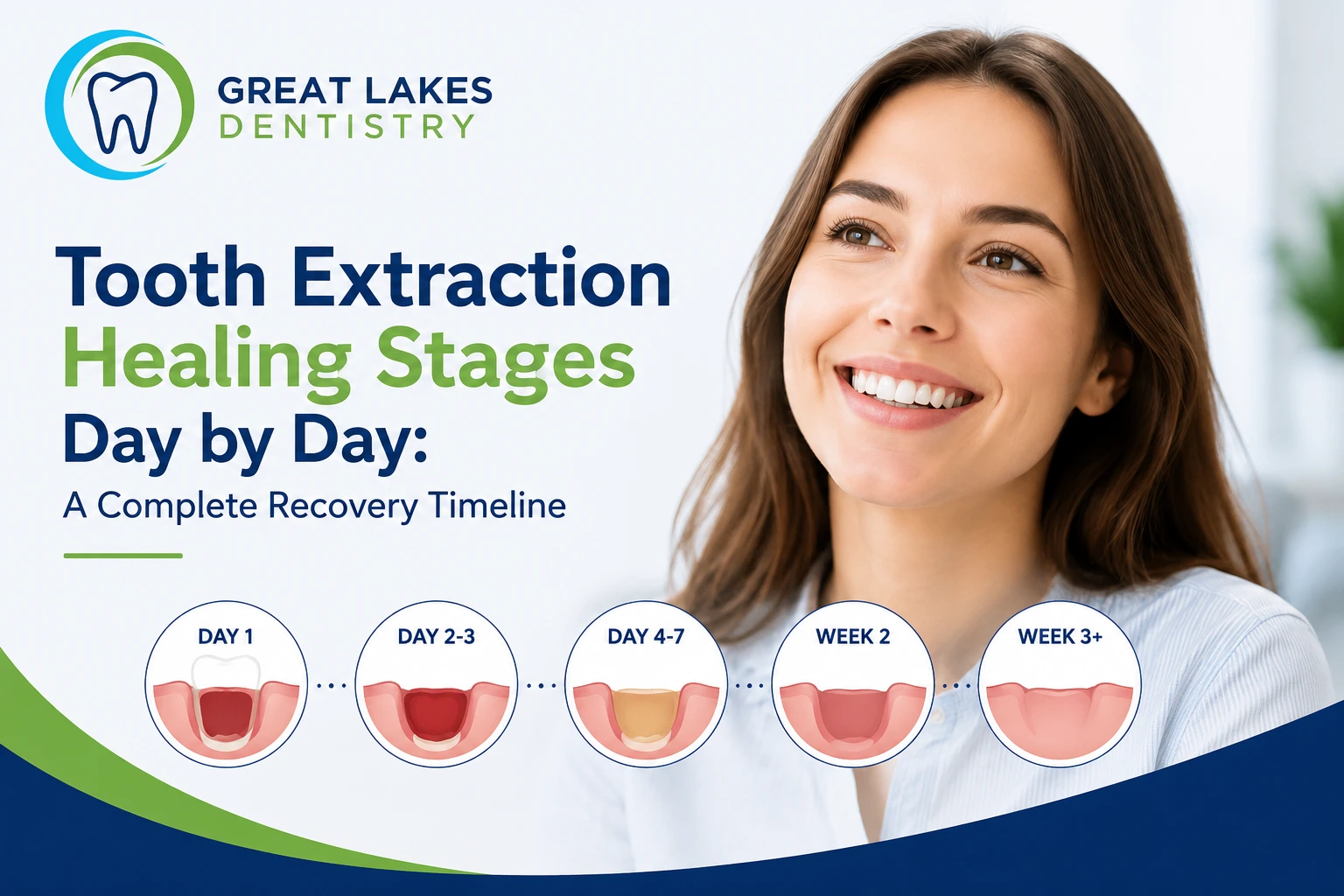
Understanding each stage of tooth extraction healing helps you recover faster and avoid complications
Tooth Extraction Healing Stages Day by Day: A Complete Recovery Timeline
Having a tooth removed can feel daunting — but understanding exactly what happens to your mouth in the hours, days, and weeks that follow makes the process far less stressful. Whether you’ve just had a wisdom tooth extraction, a simple molar removal, or a surgical extraction, knowing what normal healing looks like helps you stay calm, avoid complications, and recover as quickly as possible. This complete day-by-day guide walks you through every stage of tooth extraction healing.
What Happens to Your Mouth Immediately After a Tooth Extraction?
The moment a tooth is removed, your body begins the healing process automatically. A blood clot forms in the empty socket — this clot is the foundation of your entire recovery. It protects the underlying bone and nerve endings, stops bleeding, and provides the biological scaffolding through which new tissue will grow.
Protecting this clot in the first 24 to 48 hours is the single most important thing you can do for a smooth recovery. Dislodging it leads to a painful condition called dry socket (alveolar osteitis), which is the most common complication following tooth extraction.
Tooth Extraction Healing Timeline: Day by Day
Day 1: Clot Formation and Initial Bleeding Control
What to expect: Bleeding, swelling begins, numbness from anesthesia fades over 2 to 4 hours.
After leaving the dental chair, you’ll bite down on gauze for 30 to 45 minutes to help the blood clot form. Some oozing is completely normal for the first few hours. Once the clot has established itself, active bleeding should slow significantly.
Do not:
- Rinse, spit forcefully, or use a straw — the suction can dislodge the clot
- Smoke or use tobacco products
- Eat hard, hot, or crunchy foods
- Brush near the extraction site
Do:
- Keep your head elevated — even while sleeping — to reduce swelling and bleeding
- Apply an ice pack (20 minutes on, 20 minutes off) to manage swelling
- Take prescribed or over-the-counter pain relievers as directed
- Eat soft, cool foods like yogurt, smoothies, and mashed potatoes
Day 2 and 3: Peak Swelling and Discomfort
What to expect: Swelling and bruising reach their peak, soreness continues, possible jaw stiffness.
Days 2 and 3 are typically the most uncomfortable part of recovery. Swelling around the cheek, jaw, and even the neck is normal and expected — particularly after surgical or wisdom tooth extractions. This does not indicate infection.
Continue icing and taking pain relief as directed. Gentle warm saltwater rinses (half a teaspoon of salt in a glass of warm water) can begin after the first 24 hours to keep the area clean without disrupting the clot. Rinse gently — do not swish vigorously.
Day 3 to 5: Clot Stabilizes, Tissue Begins Closing
What to expect: Swelling begins to subside, pain gradually decreases, the clot may appear yellowish or whitish.
By day three to five, most patients notice a significant improvement in pain and swelling. The blood clot transitions in appearance — it may look white or yellowish as it matures into fibrous healing tissue. This is completely normal and should not be mistaken for infection.
Soft tissue (gingival epithelium) begins to grow over the socket edges during this phase, a process called re-epithelialization. You may begin eating slightly more varied soft foods as comfort allows — still avoiding anything hard, crunchy, or chewy near the extraction site.
If you were prescribed antibiotics, continue the full course even if you feel better. Stopping early is one of the most common causes of post-extraction infection.
Day 7: One-Week Mark — Soft Tissue Healing Well Underway
What to expect: Most swelling and bruising resolved, pain largely manageable or absent, sutures (if placed) may dissolve or be removed.
By the end of the first week, most patients feel close to normal. If you had non-dissolvable sutures placed following a surgical extraction, your dentist may remove them at a follow-up appointment around this time.
The socket itself will still have an open indentation — this is normal. The gum tissue is healing from the outside in. Complete soft tissue closure typically occurs within two to four weeks, while the deeper bone remodeling takes considerably longer.
Week 2: Significant Recovery, Gum Tissue Closing
What to expect: Socket begins to close visibly, minimal pain, diet expands to include most normal foods.
By week two, the majority of patients have returned to their normal diet and daily activities without significant discomfort. The gum tissue visibly begins to close over the socket, and the indentation becomes shallower.
You can begin brushing more normally around the extraction site — gently — and continue warm saltwater rinses to support ongoing cleanliness and healing.
Weeks 3 and 4: Soft Tissue Fully Closed
What to expect: Gum tissue seals over the socket completely, socket no longer visible on the surface.
For most simple extractions, soft tissue healing is essentially complete by the end of the third to fourth week. The surface looks like normal gum tissue, though the underlying bone is still in the process of remodeling and filling in.
Months 2 to 6: Bone Remodeling
What to expect: Underlying bone gradually fills the socket, jawbone begins to remodel.
This is the phase most patients are unaware of — and it’s a critical one. The jawbone underneath the healed gum tissue is gradually filling in the socket with new bone through a process called osteogenesis. Full bone regeneration in the socket typically takes three to six months, though this varies by individual and extraction complexity.
This phase is also when bone loss begins to become a concern if the missing tooth is not replaced. Without the stimulation of a tooth root, the surrounding jawbone can begin to resorb — gradually shrinking over time and affecting both facial structure and the health of adjacent teeth.
The Importance of Tooth Replacement After Extraction
Many patients focus entirely on the healing process and delay thinking about replacing the extracted tooth. But the decision about replacement should ideally begin during the healing period — because the window for optimal implant placement is typically within a few months of extraction, before significant bone loss occurs.
If you had a tooth removed due to decay, infection, or trauma, dental implants are widely regarded as the gold standard for replacement — the only option that replaces both the visible tooth and the root structure, preserving jawbone density long-term.
For patients replacing multiple teeth, dental bridges or full arch solutions may also be appropriate. Dr. Mohi can discuss timing and options at your post-extraction follow-up.
Warning Signs: When to Call Your Dentist
Most extractions heal without complication. However, contact our emergency dentist team promptly if you experience any of the following:
- Dry socket — severe throbbing pain beginning 2 to 4 days after extraction, often radiating to the ear. This occurs when the blood clot is lost or fails to form properly
- Signs of infection — fever above 38°C, increased swelling after day 3, pus or foul taste, swollen lymph nodes
- Persistent heavy bleeding beyond the first few hours despite gauze pressure
- Numbness lasting beyond 24 hours — may indicate nerve involvement
- Difficulty swallowing or breathing — seek immediate care
Dry socket is treatable and typically resolves quickly with professional care. Never wait it out — prompt treatment prevents further discomfort and complications.
How to Eat During Tooth Extraction Recovery
Foods to Eat
Yogurt, smoothies (no straw), mashed potatoes, scrambled eggs, oatmeal, soft pasta, soups (not too hot), avocado, soft fish, banana, and applesauce. These foods are easy to chew away from the extraction site and provide nutrition for healing.
Foods to Avoid
Crunchy chips, hard bread crusts, seeds and nuts, popcorn, spicy foods, alcohol, very hot drinks, carbonated beverages, and anything sticky or chewy. Avoid these throughout the first week to protect the blood clot and avoid irritating the healing tissue.
Tips to Speed Up Tooth Extraction Healing
- Follow all post-operative instructions given by your dentist at Great Lakes Dentistry — they are tailored to your specific extraction type
- Stay hydrated and eat nutritious, soft foods to support tissue regeneration
- Avoid smoking — tobacco dramatically slows healing and is the number one risk factor for dry socket
- Sleep with your head elevated for the first 2 to 3 nights to minimize swelling
- Use warm saltwater rinses gently from day 2 onward
- Attend your follow-up appointment — monitoring progress helps catch any complications early
According to the Canadian Dental Association, consistent post-operative care and regular dental follow-ups are key to preventing complications and ensuring complete recovery following tooth extractions.
Trusted Resources on Tooth Extraction Recovery
- Canadian Dental Association — Oral Health Resources
- Health Canada — Dental Care Guidelines
- World Health Organization — Oral Health Facts
Questions About Your Tooth Extraction Recovery in Oakville?
The team at Great Lakes Dentistry is here to support you at every stage of healing. Call us at (905) 825-1212 or book online — Dr. Gurpreet Mohi and our team are ready to help.
Frequently Asked Questions: Tooth Extraction Healing
How long does it take for a tooth extraction to fully heal?
Soft tissue (gum) healing is typically complete within 2 to 4 weeks. However, the underlying jawbone takes 3 to 6 months to fully remodel and fill in the extraction socket. The timeline varies depending on extraction complexity, your overall health, and how well post-operative instructions are followed.
What does normal healing look like after a tooth extraction?
Normal healing includes a dark red or purple blood clot forming in the socket on day one, followed by mild to moderate swelling peaking around days 2 to 3, then gradually subsiding. The clot may turn white or yellowish by days 3 to 5 as it matures into healing tissue — this is completely normal and should not be mistaken for infection.
What is dry socket and how do I know if I have it?
Dry socket (alveolar osteitis) occurs when the blood clot is dislodged or fails to form properly, leaving the underlying bone and nerve exposed. Symptoms include severe throbbing pain beginning 2 to 4 days after extraction, often radiating toward the ear or jaw. An unpleasant taste or odour may also be present. Dry socket is treatable — contact your dentist promptly for care.
When can I eat normally after a tooth extraction?
Most patients can return to a normal diet by week two of recovery. During the first week, stick to soft, cool foods and avoid anything hard, crunchy, sticky, or chewy. Avoid using straws for at least 24 to 48 hours after extraction to protect the blood clot.
How do I know if my extraction site is infected?
Signs of infection after tooth extraction include: worsening pain after the second day rather than gradual improvement, fever above 38°C, visible pus or foul taste from the socket, increasing swelling beyond day 3, and swollen lymph nodes in the neck. If you notice any of these, contact your dentist right away.
Can I brush my teeth after a tooth extraction?
Yes, but carefully. Brush and floss your other teeth normally, but avoid the extraction site on the first day. From day two onward, you can gently brush near the socket — being careful not to disturb the clot. Gentle warm saltwater rinses can be used from day two to keep the area clean.
How soon after extraction can I get a dental implant?
In some cases, implants can be placed immediately after extraction at the same appointment (immediate placement). In other cases, a healing period of 3 to 6 months is recommended to allow bone to stabilize before implant surgery. Dr. Mohi will advise on the best timing for your specific situation during your post-extraction consultation.
Is it normal to have a hole in my gum after a tooth extraction?
Yes, completely normal. The socket (hole left by the tooth) closes gradually from the outside in. The surface gum tissue typically seals over within 2 to 4 weeks, while the deeper bone continues to fill in over 3 to 6 months. The socket becoming shallower and smaller week by week is a sign of healthy healing.
Final Thoughts
Key Takeaways on Tooth Extraction Healing:
- A blood clot forms immediately after extraction — protecting it in the first 24 to 48 hours is the most critical step in recovery
- Swelling and discomfort typically peak at days 2 to 3 and improve steadily from day 4 onward
- Soft tissue healing is complete by weeks 2 to 4; bone remodeling continues for 3 to 6 months
- Dry socket is the most common complication — avoid smoking, straws, and forceful rinsing in the first 48 hours
- Warning signs of infection include worsening pain after day 2, fever, pus, or increasing swelling
- Begin discussing tooth replacement options early — ideally within the first few months after extraction — to prevent bone loss