
Professional teeth whitening delivers safe, effective, and lasting results
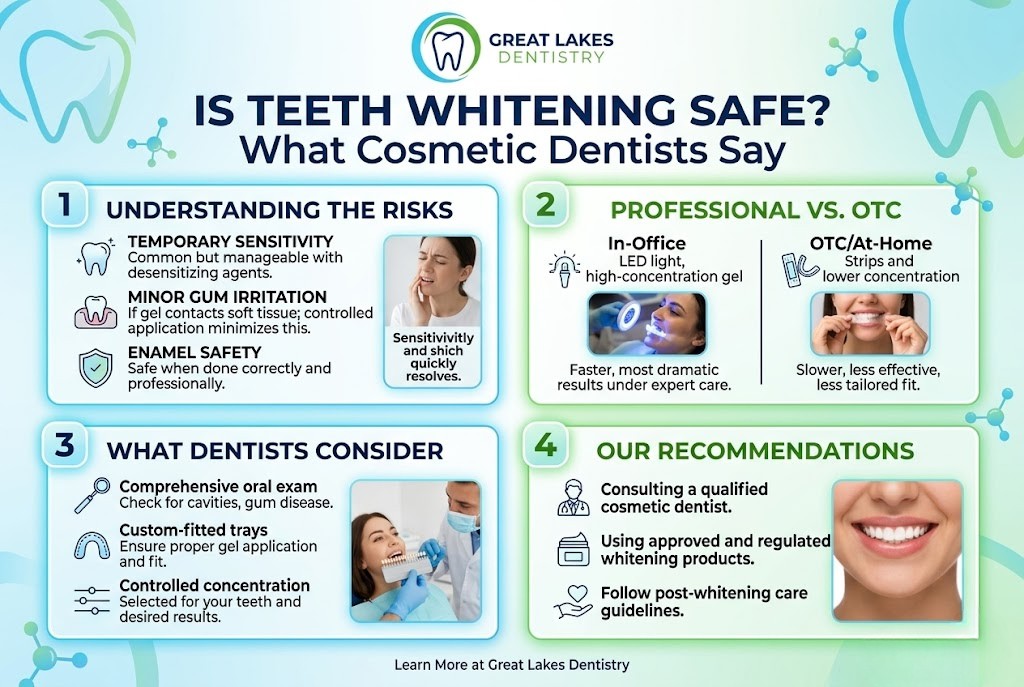
Is Teeth Whitening Safe? What Cosmetic Dentists Say
Teeth whitening has become one of the most popular cosmetic dental treatments for people who want a brighter, more confident smile. However, before undergoing the procedure, many patients ask an important question: Is teeth whitening safe?
What Is Teeth Whitening?
Teeth whitening is a non-invasive cosmetic procedure that lightens the natural color of your teeth by removing stains and discoloration. These stains can develop over time due to coffee, tea, and red wine, smoking or tobacco use, poor oral hygiene, and aging.
Professional whitening treatments typically use hydrogen peroxide or carbamide peroxide, which safely break down stains without damaging the tooth structure when applied properly. A qualified cosmetic dentist ensures that the treatment is suitable for your teeth and that the correct concentration of whitening agents is used.
Key Understanding
Professional whitening agents work by penetrating the enamel to break apart stain compounds — not by stripping or damaging the tooth surface. Correct application is essential for safe, uniform results.
Is Teeth Whitening Safe for Everyone?
While teeth whitening is generally safe, it is not suitable for every individual. Its safety depends on factors such as oral health, existing dental work, and sensitivity levels.
For most healthy adults, whitening is completely safe when performed by a licensed dentist, customized to the patient’s needs, and done using clinically approved products. Professional dental clinics carefully examine your teeth and gums before starting the procedure. This step helps prevent complications and ensures the best possible outcome.
Common Side Effects and How to Manage Them
Even though teeth whitening is safe, some patients may experience mild and temporary side effects. Here are the most common ones to be aware of.
Tooth Sensitivity
Sensitivity is the most common side effect. It usually occurs when the whitening agents temporarily affect the inner layer of the tooth. This condition is short-lived and often resolves within a few days. Dentists can recommend desensitizing products to manage any discomfort during or after treatment.
Gum Irritation
If the whitening gel comes into contact with the gums, it may cause slight irritation. Professional dentists use protective barriers to minimize this risk. In-office treatments are carefully monitored to keep the gel precisely where it needs to be.
Uneven Results
Over-the-counter kits may lead to uneven whitening if not applied correctly. This is why professional supervision is recommended. Custom-fitted trays provided by a dentist ensure even coverage across all tooth surfaces.
Dentists often provide aftercare instructions and desensitizing products to ensure your treatment remains comfortable and effective. If you experience any persistent discomfort, the team at Great Lakes Dentistry is available to help.
Professional Whitening vs At-Home Kits
Understanding the difference between professional and at-home whitening options is essential when considering safety.
In-Office Whitening
In-office treatments are performed under controlled conditions. Dentists use stronger whitening agents while protecting your gums and soft tissues. The results are immediate and more uniform. This is the safest and most effective route for patients with sensitivity concerns or more significant discoloration.
Take-Home Kits from Dentists
Many clinics offer custom take-home kits that include trays designed specifically for your teeth. These provide a safer alternative to generic store-bought products. Because the trays are fitted to your exact dental anatomy, the gel is distributed evenly and kept away from gum tissue.
Over-the-Counter Products
Whitening strips, gels, and toothpastes are widely available, but they are less effective and can be misused. Without proper guidance, these products may increase the risk of sensitivity or uneven results. Always consult a dentist before beginning any whitening regimen to confirm your teeth and gums are healthy enough for treatment. A professional teeth cleaning before whitening also helps ensure even, optimal results.
Who Should Avoid Teeth Whitening?
Although whitening is safe for most people, certain individuals should avoid or delay the procedure. These include:
- Patients with untreated cavities
- Individuals with gum disease
- People with extremely sensitive teeth
- Those with dental restorations like crowns or veneers
- Children and teenagers without professional approval
In such cases, a dentist may recommend alternative cosmetic treatments or address underlying issues before proceeding with whitening. For patients with existing crowns or veneers, it is important to understand that whitening agents do not change the colour of dental restorations. Learn more about dental crowns at Great Lakes Dentistry and how they interact with cosmetic treatments.
Seek a Dental Evaluation First If You Have:
- Untreated decay or cavities
- Active gum disease or inflammation
- Significant existing dental restorations
- A history of extreme tooth sensitivity
- Ongoing dental pain of any kind
These conditions should be addressed before whitening begins to ensure safe and effective results.
How to Maintain Whitening Results
After achieving a brighter smile, maintaining the results is essential. Teeth can become stained again if proper care is not taken.
Here are some effective ways to extend your whitening results:
- Limit consumption of staining foods and beverages such as coffee, tea, and red wine
- Rinse your mouth after drinking coffee or tea to reduce surface staining
- Avoid smoking or tobacco products, which are among the most significant contributors to tooth discoloration
- Brush and floss regularly to prevent plaque buildup that dulls enamel over time
- Visit your dentist for routine cleanings — professional teeth cleanings in Oakville help remove surface stains and keep your smile looking fresh between whitening treatments
Consistency in oral care helps preserve long-term results and keeps your smile looking bright.
What Cosmetic Dentists Recommend
Cosmetic dentists emphasize the importance of professional guidance when it comes to teeth whitening. Their key recommendations include:
- Always consult a dentist before starting any whitening treatment
- Avoid unverified or low-quality products that have not been clinically tested
- Follow all instructions carefully to prevent complications such as sensitivity or gum irritation
- Choose customized treatments over generic solutions for safer, more uniform results
Professional clinics focus on both safety and aesthetics, ensuring that your smile looks natural while protecting your dental health.
In-Office Whitening
Performed under direct supervision. Stronger agents used safely with gum protection in place. Immediate, uniform results in a single appointment.
Take-Home Kits (Dentist-Provided)
Custom-fitted trays ensure even gel distribution. Safer than store-bought strips. Results develop over one to two weeks with consistent use.
Why Professional Supervision Matters
One of the biggest advantages of visiting a dental clinic for whitening is the level of care and precision involved. Dentists assess factors such as enamel thickness, gum health, and previous dental work before recommending a treatment plan.
This personalized approach reduces risks and improves outcomes. It also ensures that the whitening process does not interfere with existing dental conditions. If a patient has underlying oral health concerns, a dentist will address those first — protecting long-term dental health alongside cosmetic goals.
If you are unsure whether you are a good candidate for whitening, the team at Great Lakes Dentistry in Oakville can conduct a thorough assessment and guide you toward the safest, most effective option for your smile.
Ready for a Brighter Smile?
Professional whitening is safe, effective, and tailored to your needs. The team at Great Lakes Dentistry in Oakville is here to help you achieve the results you want.
Book Appointment
Frequently Asked Questions (FAQs)
Is teeth whitening safe for sensitive teeth?
Yes, but it should be done under professional supervision. Dentists can adjust the treatment concentration and use desensitizing products to reduce discomfort before, during, and after the procedure.
How long does teeth whitening last?
Results typically last from several months up to two years, depending on your lifestyle and oral care routine. Avoiding staining foods and beverages and maintaining regular dental cleanings helps extend results significantly.
Can teeth whitening damage enamel?
No. Professional whitening does not damage enamel when performed correctly using clinically approved products. The whitening agents break apart stain compounds within the enamel without altering its structure.
Is at-home whitening as safe as professional whitening?
At-home whitening can be safe if used correctly, but professional treatments offer greater control and consistency. Dentist-provided take-home kits with custom trays are a safer at-home alternative to generic over-the-counter strips.
How often can I whiten my teeth?
Most dentists recommend whitening once every 6 to 12 months, depending on your dental condition and lifestyle. Whitening too frequently can lead to increased sensitivity over time.
Does whitening work on crowns or veneers?
No. Whitening treatments only work on natural tooth enamel. Restorations such as crowns and veneers will not change colour with whitening agents. Your dentist can advise on the best approach to achieve a uniform appearance.
What should I avoid after teeth whitening?
Avoid dark-coloured foods and drinks such as coffee, tea, red wine, and berries for at least 24 to 48 hours after treatment. You should also avoid smoking, as tobacco is one of the fastest ways to re-stain newly whitened teeth.
Is teeth whitening painful?
The procedure is generally not painful. Some patients experience mild, temporary sensitivity during or after treatment, which typically resolves within a few days. Your dentist can recommend desensitizing toothpaste or gels to manage any discomfort.
Final Thoughts
Key Takeaways on Teeth Whitening Safety:
- Safe for most healthy adults when performed professionally
- Side effects are mild and temporary — sensitivity and gum irritation are common but manageable
- Professional supervision ensures correct concentration, even application, and gum protection
- Not suitable for patients with untreated decay, gum disease, or certain restorations
Teeth whitening is a safe and effective cosmetic procedure when performed correctly. With the right approach and professional supervision, you can achieve a brighter smile without compromising your dental health.
While at-home products may seem convenient, they cannot replace the safety and precision offered by a qualified dentist. Consulting a professional ensures that your treatment is tailored to your needs and delivers the best possible results.
If you are considering teeth whitening, choosing an experienced clinic will help you achieve a confident smile safely and efficiently. The team at Great Lakes Dentistry in Oakville is here to guide you through every step — from your initial assessment to aftercare. Book your appointment today or call (905) 825-1212.