
Dental implants restore function, confidence, and long-term oral health for patients across Oakville
Losing a tooth can affect much more than your smile. It can change the way you eat, speak, and feel about your appearance. For many patients exploring replacement options, one question comes up early: are dental implants worth it? A modern solution for missing teeth, dental implants offer durability, function, and a natural appearance that many traditional restorations cannot match. Understanding how a tooth implant works can help you decide whether it is the right investment for your oral health.
What Are Dental Implants?
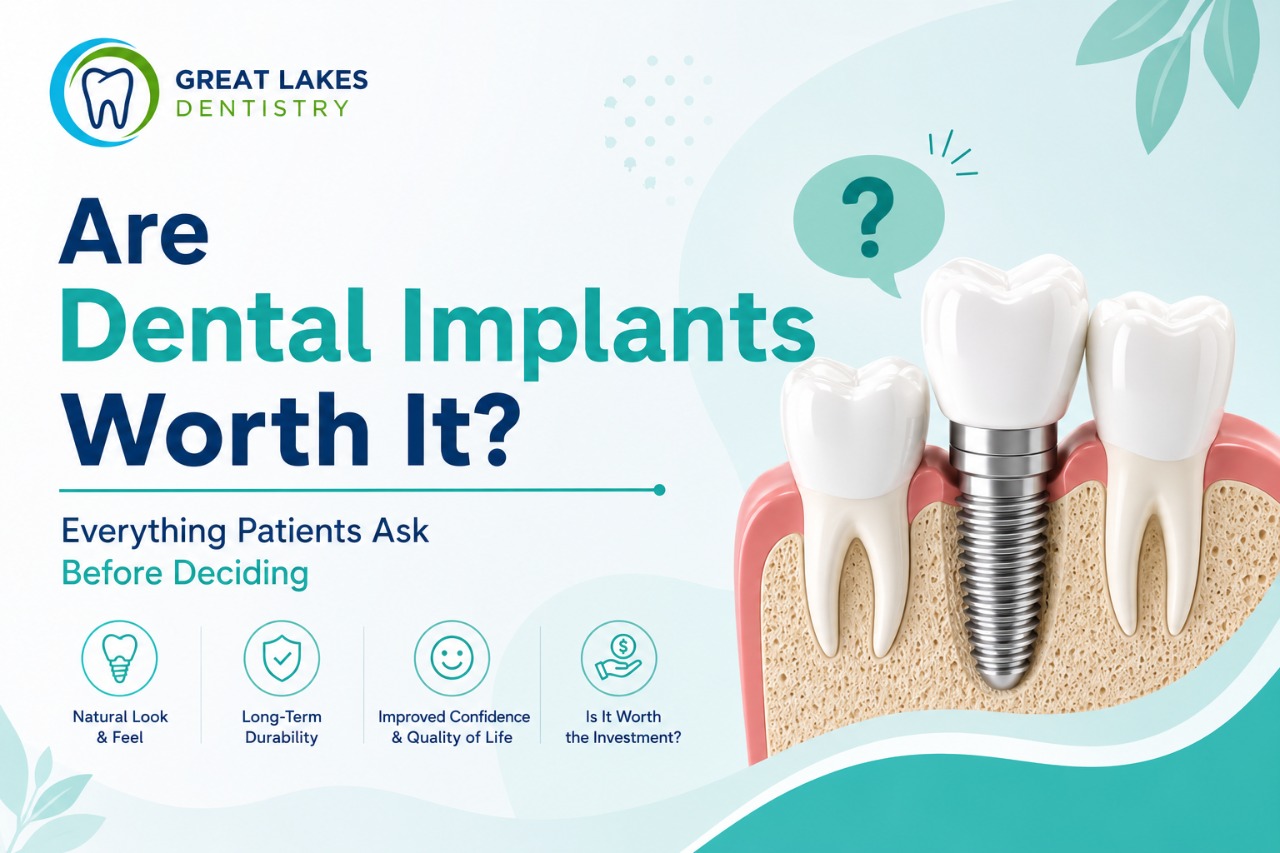
Dental implants are small titanium posts placed into the jawbone to replace missing tooth roots. Once healed, the implant supports a custom-made crown, bridge, or denture.
Unlike removable appliances, a tooth implant becomes securely anchored within the bone. This creates a stable foundation that looks, feels, and functions much like a natural tooth. Because implants replace both the visible tooth and its root structure, they help restore complete function while supporting long-term oral health.
Our family dentistry team at Great Lakes Dentistry works closely with each patient to determine the most appropriate tooth replacement approach for their unique situation.
Why So Many Patients Choose Dental Implants
Patients often choose implants because they provide both cosmetic and functional benefits. Here is what sets them apart from other replacement options:
Natural Appearance
One of the biggest advantages of dental implants is their realistic appearance. The final restoration is designed to match the colour, shape, and alignment of surrounding teeth — so precisely that most people cannot tell the difference.
Improved Comfort
Because implants are fixed in place, they do not move or shift while eating or speaking. This eliminates the discomfort commonly associated with removable dentures. Patients who experience dental anxiety may benefit from speaking with our sedation dentistry team before their procedure.
Stronger Bite Function
A missing tooth can reduce chewing efficiency. Implant-supported restorations restore bite strength, making it easier to enjoy a full range of foods without restriction.
Jawbone Support
After tooth loss, the jawbone can gradually shrink due to lack of stimulation. Since implants integrate directly with the bone, they help preserve structure and reduce future bone deterioration — a benefit no denture or bridge can provide.
Long-Term Reliability
With proper care, dental implants can remain functional for decades, making them one of the most dependable restorative options available in modern dentistry.
Understanding the Tooth Implant Procedure
Many patients feel uncertain because they are unfamiliar with the tooth implant procedure. The process usually involves several carefully planned stages.
Step 1: Initial Consultation
Your dentist begins with a detailed evaluation that may include digital imaging, X-rays, and a full oral health assessment. Our team is also available for any emergency dentist concerns that may arise during the treatment process.
Step 2: Implant Placement
The titanium post is surgically inserted into the jawbone under local anesthesia. Most patients report that this step is easier than expected — many describe it as more comfortable than a tooth extraction.
Step 3: Healing and Osseointegration
During healing, the implant naturally bonds with the surrounding bone through a process called osseointegration. This phase typically takes several months. According to the Canadian Dental Association, checkups are scheduled throughout the following year to ensure implants are functioning properly.
Step 4: Restoration Placement
Once healing is complete, an abutment and custom restoration are attached to complete the replacement. Our dental crowns are custom-crafted to blend naturally with your smile and provide lasting function.
Although the tooth implant procedure requires time, it creates exceptional stability and long-term results that most other restorations cannot match.
Is the Procedure Painful?
This is one of the most common concerns patients raise before starting treatment.
Modern techniques have made implant placement highly predictable and comfortable. During surgery, local anesthesia keeps the area fully numb. Afterward, mild soreness or swelling is normal for a few days. Most patients manage recovery with routine post-operative care and over-the-counter discomfort relief.
For many people, the experience is less uncomfortable than having a wisdom tooth extraction.
Who Is a Good Candidate?
Most adults with missing teeth may qualify for implant treatment if they have:
- Healthy gum tissue
- Adequate jawbone support
- Good oral hygiene habits
- Stable overall health
Even patients with bone loss may still be candidates after preparatory procedures such as grafting. Maintaining healthy gums begins with regular teeth cleaning appointments, which our team recommends before any restorative procedure.
A professional consultation is the best way to determine whether dental implants are suitable for your specific needs.
How Long Do Dental Implants Last?
One reason many patients consider implants worthwhile is their longevity. A well-maintained tooth implant can often last 20 years or longer. In many cases, the implant post itself can last a lifetime.
The visible crown may eventually require replacement due to normal wear, but the implanted foundation is designed for exceptional durability. Long-term success depends on:
- Daily brushing and flossing
- Routine professional checkups
- Avoiding tobacco use
- Protecting against teeth grinding
The Ontario Dental Association emphasizes that consistent at-home care and regular professional visits are essential for the long-term health of all dental restorations.
Comparing Dental Implants to Other Options
When replacing missing teeth, patients often compare implants with bridges and dentures. Here is how each option compares:
Dental Bridges
Bridges rely on neighbouring teeth for support. While effective, they may require reshaping healthy natural teeth and do not address underlying bone loss. Learn more about whether a dental bridge might be an appropriate alternative for your situation.
Removable Dentures
Dentures can restore appearance and basic function, but they may shift or loosen over time, require adhesives, and do not stimulate the jawbone — leading to gradual bone loss beneath the appliance.
Implant-Based Restoration
An implant-supported replacement stands independently, offers greater stability, and helps maintain jawbone health. For patients seeking permanence and confidence, this restorative approach often provides the most complete long-term solution.
Are Dental Implants Worth the Cost?
Cost is one of the biggest deciding factors for patients considering implant treatment.
Dental implants often involve a higher initial investment compared to other tooth replacement methods. However, many patients find the long-term value outweighs the upfront expense.
Traditional restorations may require future adjustments, repairs, or replacements — and those ongoing costs can add up significantly over time. Because dental implants offer durability, functionality, and lower long-term maintenance, they are often viewed as a smart investment in both oral health and daily quality of life.
Questions to Ask Before Moving Forward
Before beginning treatment, it helps to ask your dental provider:
- Am I a strong candidate for implant placement?
- Will additional procedures such as bone grafting be needed?
- What is the estimated healing timeline?
- How should I care for the implant after placement?
- What outcomes can I realistically expect?
These questions help ensure informed decision-making and confidence throughout the process. If missing teeth have affected your overall alignment, our Invisalign service may also be worth discussing as part of a comprehensive treatment plan. Patients who require additional care such as a root canal treatment prior to implant placement will be advised accordingly during their consultation.
Trusted Resources on Dental Implants
For more information, we recommend these authoritative sources:
- Canadian Dental Association — Dental Implants
- Ontario Dental Association — Dental Procedures
- Health Canada — Dental Care Guidelines
Ready to Explore Dental Implants in Oakville?
The team at Great Lakes Dentistry is welcoming new and returning patients. Call us at (905) 825-1212 or book online — Dr. Gurpreet Mohi looks forward to helping you take the first step toward a confident, restored smile.
Frequently Asked Questions About Dental Implants
How successful is the tooth implant procedure?
Dental implant placement has a high success rate, often exceeding 95% when completed by experienced professionals. At Great Lakes Dentistry, Dr. Mohi uses 3D digital imaging and precise surgical planning to ensure predictable, reliable outcomes for every patient.
How long does the complete implant treatment take?
The complete process often takes several months due to healing and bone integration (osseointegration). From initial consultation to final crown placement, most standard cases are completed within 4–6 months. Patients requiring bone grafting may need additional time.
Are implants better than dentures?
For many patients, implants provide greater comfort, stability, and long-term oral health benefits. Unlike dentures, implants do not shift, require adhesives, or allow the jawbone to shrink over time. However, every case is different — Dr. Mohi will help you determine the best option at your consultation.
How do I care for a tooth implant?
Caring for a dental implant is straightforward — brush, floss, and attend regular professional teeth cleaning appointments just as you would for natural teeth. Avoiding tobacco and protecting against teeth grinding are also important for long-term implant success.
Do implants feel like real teeth?
Yes. Once fully healed, dental implants typically feel stable and natural during everyday activities including eating, speaking, and smiling. Most patients report that they forget the implant is there — which is the goal. For more detailed information from a Canadian dental authority, visit the Ontario Dental Association’s dental procedures page.
Can I get a dental implant if I have been missing a tooth for years?
In many cases, yes. However, long-term tooth loss often leads to jawbone shrinkage, which may require a bone grafting procedure before implant placement. A 3D CT scan at Great Lakes Dentistry will determine the current state of your bone and outline the best treatment pathway.
Final Thoughts
Key Takeaways on Dental Implants:
- Dental implants replace both the tooth root and visible crown for a complete, natural result
- Most healthy adults with adequate bone density are good candidates
- The procedure is far more comfortable than most patients expect
- A well-maintained implant can last 20 years or longer — often for a lifetime
- While the upfront cost is higher, implants typically offer better long-term value than dentures or bridges
- Great Lakes Dentistry offers sedation, flexible scheduling, and transparent pricing