
February 26, 2026
8 min read
Are Braces Covered by Dental Insurance Ontario? Coverage Explained
Orthodontic treatment supports more than aesthetics. Proper tooth alignment can improve bite function, oral hygiene, and long-term dental stability. Still, one practical question often comes first: are braces covered by dental insurance?
The answer depends on policy details, provider rules, patient age, and documented clinical needs. This guide explains how orthodontic coverage typically works in Canada, what Ontario patients should verify, and how to manage the temporary discomfort braces may cause.
For families and individuals in Oakville, Ontario, clinics such as Great Lakes Dentistry can help review insurance benefits and financial options during a consultation.
Quick Answer: Does Dental Insurance Cover Braces?
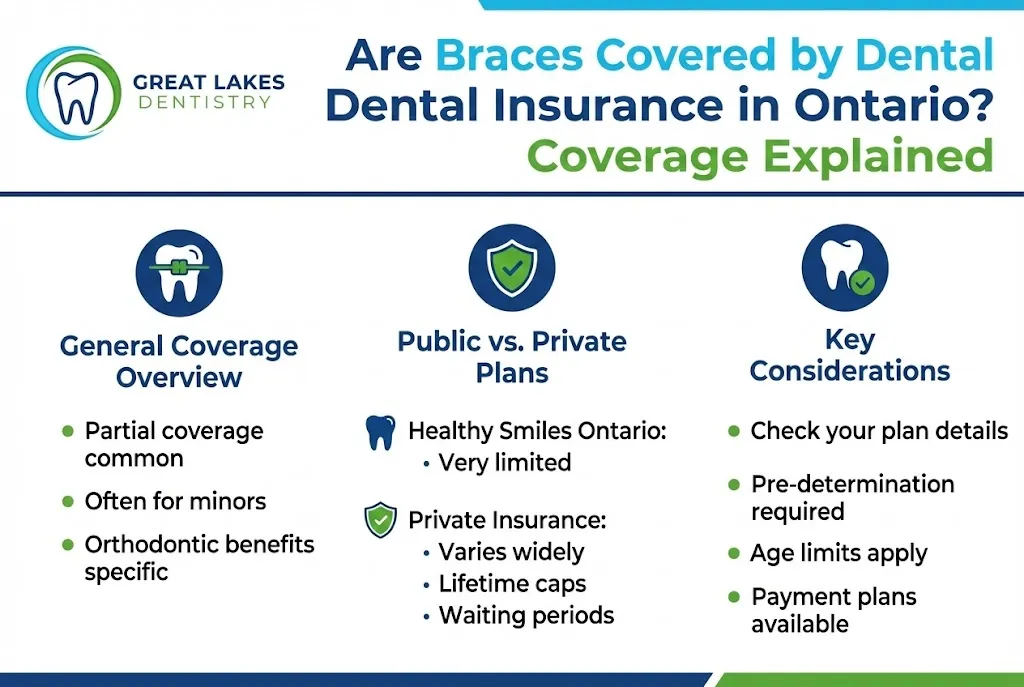
Braces may be partially covered by dental insurance in Canada if the policy includes orthodontic benefits. Coverage commonly varies based on age limits, reimbursement percentages, waiting periods, and lifetime maximums. Benefits are more frequently available for dependent children than adults.
Understanding Orthodontic Coverage in Canada
Dental insurance policies are not standardized nationwide. Each insurer defines its own orthodontic terms and conditions.
What Most Dental Insurance Plans Evaluate
Orthodontic Coverage Clause
Not all dental insurance plans include braces. Some policies exclude orthodontics, while others provide optional upgrades.
Age Restrictions
Coverage often prioritizes dependents under 18. Adult orthodontic benefits may be limited or unavailable.
Lifetime Maximums
Orthodontic coverage typically includes a lifetime cap rather than an annual limit.
Medical Necessity
Insurers may request clinical documentation showing functional need, such as bite correction or crowding affecting oral health.
Patients reviewing dental insurance Canada policies should confirm orthodontic details carefully.
Dental Insurance Ontario: Key Coverage Considerations
Residents with dental insurance Ontario benefits may notice variations depending on whether coverage is employer-sponsored or privately purchased.
Important Factors in Ontario Dental Insurance
Waiting Periods
Orthodontic benefits may activate several months after enrollment.
Pre-Authorization Requirements
Some insurers require approval supported by diagnostic imaging and a treatment plan.
Coverage Percentages
Plans often reimburse 25%–50% of eligible orthodontic costs until the lifetime maximum is reached.
Eligible Appliances
Coverage may differ between traditional braces, ceramic braces, and clear aligners.
Anyone comparing Ontario dental insurance options should review these conditions early.
Does Insurance Cover Braces and Clear Aligners the Same Way?
Coverage equality is not guaranteed.
Traditional Braces
Most insurers recognize braces as standard orthodontic treatment.
Clear Aligners
Certain policies classify aligners as cosmetic unless medical necessity is documented.
Why Verification Matters
Assumptions about identical reimbursement can lead to unexpected costs. Dental clinics often assist with benefit verification.
How to Get Dental Insurance That Includes Orthodontic Coverage
Individuals without workplace benefits frequently ask how to get dental insurance that may help with braces expenses.
Practical Steps for Patients
Step 1: Identify Treatment Needs
Orthodontic care for a child, teen, or adult?
Step 2: Compare Insurance Options
Look specifically for orthodontic benefits rather than general dental coverage.
Step 3: Review Limitations
Check:
-
Age caps
-
Waiting periods
-
Reimbursement percentages
-
Lifetime maximums
Step 4: Consider Bundled Policies
Some health and dental insurance packages provide broader protection.
Step 5: Confirm With a Dental Provider
Clinics can often verify eligibility directly with insurers.
Patients evaluating insurance with dental plans benefit from professional clarification.
Do Dental Insurance Plans Pay for Braces Upfront?
Most insurers reimburse orthodontic treatment gradually.
Typical Reimbursement Structure
-
Initial payment after treatment begins
-
Scheduled payments during treatment
-
Coverage continues until the lifetime maximum is reached
Understanding reimbursement timing helps patients plan finances realistically.
Out-of-Pocket Costs Patients Should Expect
Even with dental insurance Canada Ontario, braces commonly involve personal expenses.
Costs Often Not Fully Covered
-
Initial consultations
-
Diagnostic imaging
-
Retainers
-
Emergency repairs
-
Cosmetic upgrades
Many dental clinics provide installment-based payment plans to reduce financial pressure.
Braces and Discomfort: What Patients Experience
Orthodontic treatment applies controlled pressure to shift teeth gradually. This biological process can produce temporary soreness.
Pain Levels During Orthodontic Treatment
Normal Discomfort
-
Mild pressure or aching
-
Sensitivity while chewing
-
Peaks within 24–72 hours after adjustments
Inflammation-Related Tenderness
-
Gum soreness
-
Redness
-
Often associated with plaque accumulation
Pain That May Indicate Infection
-
Persistent throbbing
-
Swelling
-
Fever
-
Unusual taste
Dental authorities such as the American Dental Association (ADA) and the Canadian Dental Association (CDA) confirm that short-term soreness is expected, while severe or worsening pain requires professional evaluation.
How Pain Intensity Changes Over Time
Early Treatment Phase
Pressure and tenderness are most noticeable.
Adjustment Periods
Temporary flare-ups lasting a few days.
Later Stages
Discomfort typically becomes milder and shorter.
Pain rarely remains constant.
Pain Locations and Their Possible Meaning
Tooth Sensitivity
Often reflects healthy orthodontic movement.
Gum Tenderness
May indicate inflammation or hygiene challenges.
Jaw Discomfort
Can occur as bite alignment shifts.
Sharp Localized Irritation
Frequently caused by bracket friction or a protruding wire.
Persistent discomfort should prompt a dental visit.
Step-by-Step Solutions for Managing Braces Discomfort
What Patients Should Do
1. Apply Orthodontic Wax
Protects soft tissues from irritation.
2. Rinse With Warm Salt Water
Helps soothe inflamed areas.
3. Choose Soft Foods Temporarily
Reduces pressure on sensitive teeth.
4. Maintain Excellent Oral Hygiene
Prevents inflammation-related pain.
5. Follow Dentist-Recommended Pain Relief
Use medications only as advised.
What Patients Should NOT Do
-
Do not ignore severe pain
-
Avoid hard or sticky foods
-
Do not attempt DIY repairs
-
Avoid excessive pressure on sore teeth
Improper handling can worsen discomfort.
Emotional Reassurance: Braces Discomfort Is Temporary
Many orthodontic patients feel concerned when soreness appears. This reaction is understandable.
Dental professionals often reassure patients:
“I understand how uncomfortable adjustments can feel. Most braces-related soreness is temporary and manageable.”
Clear expectations reduce anxiety.
When NOT to Google: Call a Dentist Immediately
Online resources are helpful, but certain symptoms require professional care.
Seek Immediate Dental Evaluation If:
-
Pain becomes intense or sharp
-
Swelling develops
-
Fever appears
-
Bleeding persists
-
A bracket detaches with pain
Early intervention prevents complications.
Why Professional Guidance Matters
Orthodontic treatment influences bone remodeling, tooth stability, and soft tissue adaptation. Personalized supervision ensures safety and predictable progress.
Clinics such as Great Lakes Dentistry in Oakville, Ontario support patients with:
-
Insurance benefit verification
-
Treatment planning
-
Comfort management
-
Emergency orthodontic care
Frequently Asked Questions
Are braces covered by dental insurance Canada?
Some policies include orthodontic benefits. Coverage varies by insurer and plan.
Does dental insurance Ontario cover adult braces?
Certain plans provide partial adult benefits. Many prioritize dependents.
How can patients confirm orthodontic coverage?
They can request a benefits breakdown or ask the dental clinic to verify eligibility.
Is braces pain normal?
Yes. Mild soreness after adjustments is common and temporary.
What helps reduce braces discomfort?
Orthodontic wax, saltwater rinses, soft foods, and good hygiene.
References and Evidence-Based Guidance
This article aligns with patient-care principles consistent with:
These authorities emphasize accurate diagnosis, professional supervision, and appropriate discomfort management.
Conclusion
So, are braces covered by dental insurance? In Canada, the answer is often yes — but partially and conditionally. Coverage depends on policy structure, orthodontic clauses, age limits, reimbursement percentages, and lifetime maximums. Reviewing benefits early helps patients avoid unexpected expenses.
Patients should also remember that temporary braces discomfort is normal. Most soreness fades as tissues adapt. However, severe or persistent pain always warrants professional evaluation.
For individuals and families in Oakville, Ontario, consulting a qualified dental provider offers clarity, reassurance, and a safe orthodontic journey.
How This Article Was Created
How This Article Was Created
This content was developed using established orthodontic care principles and patient-education guidance aligned with recognized authorities, including the American Dental Association, the Canadian Dental Association, and Health Canada. No fabricated statistics or unsupported claims were included.