
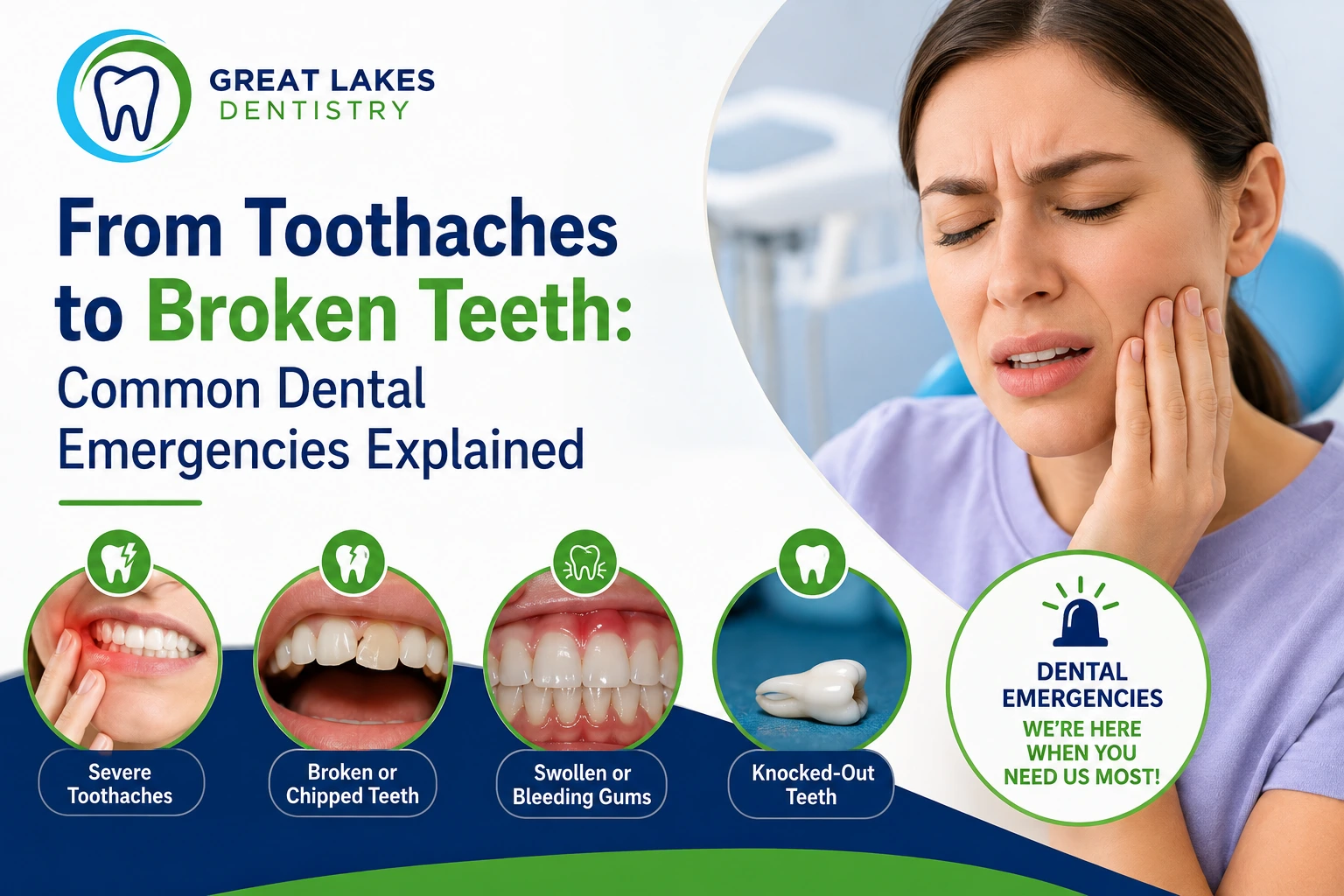
Knowing what to do in a dental emergency can protect your tooth, reduce pain, and prevent a manageable problem from becoming a serious one
From Toothaches to Broken Teeth: Common Dental Emergencies Explained
A dental emergency rarely announces itself at a convenient time. Whether it’s a sudden, severe toothache that wakes you at 2 a.m., a tooth knocked out during a weekend game, or a crown that falls off at a dinner party — knowing what qualifies as a dental emergency, what to do in the first critical minutes, and when to call your dentist can mean the difference between saving a tooth and losing one permanently. This guide covers the most common dental emergencies, what causes them, and exactly how to respond.
What Counts as a Dental Emergency?
Not every dental concern needs same-day attention — but some absolutely do. A dental emergency is any situation involving:
- Severe, uncontrolled pain that does not respond to over-the-counter relief
- Uncontrolled bleeding from the mouth
- A knocked-out permanent tooth
- A tooth that has been pushed out of position or loosened by trauma
- Significant facial swelling — especially swelling that affects the eye, neck, or throat
- A lost restoration (crown, filling, bridge) causing pain or sharp edges
- Signs of dental abscess — fever, swelling, and throbbing pain together
If you are unsure whether your situation is urgent, always err on the side of calling your dentist. A brief phone consultation can help triage your concern and prevent a non-emergency from escalating.
The Most Common Dental Emergencies — Explained
1. Severe Toothache
A toothache that comes on suddenly and intensely — especially one that throbs, radiates to the jaw or ear, or worsens when lying down — is rarely minor. Severe dental pain typically signals:
- Deep tooth decay that has reached the nerve
- A dental abscess — a bacterial infection at the root tip or in the gum tissue
- A cracked or fractured tooth with exposed dentin or pulp
- Gum disease that has progressed to affect the bone and root surfaces
What to do: Take an over-the-counter pain reliever (ibuprofen is generally most effective for dental pain — do not place aspirin directly on the gum tissue as this can cause chemical burns). Apply a cold compress to the cheek for 20-minute intervals to manage swelling. Contact your dentist as soon as possible — do not wait to see if it resolves on its own.
Never ignore a severe toothache. A dental abscess can spread to the jaw, neck, and airway if left untreated — a condition that can become life-threatening. According to the Canadian Dental Association, dental infections are among the most preventable causes of serious medical complications related to oral health.
2. Knocked-Out Tooth (Dental Avulsion)
A knocked-out permanent tooth is one of the true time-critical dental emergencies. The likelihood of successfully reimplanting the tooth drops significantly after 30 minutes outside the socket — and approaches zero after two hours without proper storage.
What to do immediately:
- Pick up the tooth by the crown (the white part) — never touch the root
- If the tooth is dirty, rinse it gently with milk or saline — do not scrub it
- If possible, gently reinsert the tooth into the socket and hold it in place by biting softly on a clean cloth
- If reinsertion is not possible, store the tooth in milk, saline, or between your cheek and gum — never in plain water
- Get to a dentist within 30 minutes
Note: Do not attempt to reimplant baby (primary) teeth — this can damage the developing permanent tooth underneath. Seek dental care regardless so the site can be assessed.
3. Cracked or Broken Tooth
Teeth can crack or fracture from biting down on something hard, a sports impact, a fall, or even from grinding over time. Cracked teeth present very differently depending on severity:
- Craze lines — superficial cracks in enamel only, typically painless and not urgent
- Fractured cusp — a piece of tooth breaks off, often around a filling. Usually causes sharp pain when biting
- Cracked tooth — a crack extending from the crown toward the root. Pain on biting and temperature sensitivity are common
- Split tooth — the tooth is completely split into segments. Often non-restorable
- Vertical root fracture — fracture begins at the root, often with minimal symptoms until infection develops
What to do: Rinse your mouth with warm water. Apply a cold compress to the cheek to manage swelling. If a piece of tooth has broken off, save it and bring it to your appointment. Avoid chewing on the affected side and contact your dentist promptly. Depending on severity, treatment may range from a dental crown to root canal treatment or extraction.
4. Lost or Broken Crown or Filling
A crown or filling that falls out is not always painful — but it does expose the underlying tooth structure to bacteria, temperature sensitivity, and further damage. What feels like a minor inconvenience can quickly become a more serious problem if left unaddressed.
What to do: Keep the crown if you can find it — your dentist may be able to recement it temporarily or permanently depending on its condition. In the interim, dental wax or a temporary filling material (available at most pharmacies) can protect the exposed tooth. Avoid chewing on that side and avoid very hot, cold, or sweet foods which may trigger sensitivity. Call your dentist for an urgent appointment.
5. Dental Abscess
A dental abscess is a pocket of bacterial infection that forms either at the root tip (periapical abscess) or in the gum tissue beside a tooth (periodontal abscess). It is one of the most serious dental emergencies because the infection can spread rapidly to the surrounding bone, jaw, neck, and — in the most severe cases — the airway.
Symptoms include:
- Severe, persistent throbbing pain that may radiate to the jaw, ear, or neck
- Swelling of the cheek, jaw, or neck
- Fever and general feeling of illness
- A pimple-like bump on the gum (draining fistula)
- Sensitivity to hot and cold
- Swollen, tender lymph nodes in the neck
What to do: Do not wait. A dental abscess will not resolve on its own without treatment. If swelling is affecting your ability to swallow or breathe, go to the emergency room immediately. Otherwise, call your dentist for a same-day urgent appointment. Treatment typically involves draining the abscess, a course of antibiotics, and definitive treatment of the source tooth — often root canal treatment to remove the infected pulp and save the tooth.
6. Soft Tissue Injuries — Cuts and Lacerations
Injuries to the lips, tongue, cheeks, and gums from falls, sports, or accidents can produce significant bleeding — which is alarming but often manageable at home initially.
What to do: Apply gentle, firm pressure to the area with a clean cloth or gauze for 10 to 15 minutes. Use cold water to rinse the area gently. If bleeding does not slow after 15 to 20 minutes of sustained pressure, or if the laceration is deep and may require stitching, seek care at your dental office or local emergency room.
7. Lost or Broken Orthodontic Appliance
A broken wire, poking bracket, or dislodged aligner does not always constitute a dental emergency — but certain situations do require prompt attention. A broken wire poking into the cheek or tongue, or a loose bracket that is swallowed or poses a choking risk, should be seen urgently.
What to do: For a poking wire, use a pencil eraser or clean wax to temporarily bend the wire away from soft tissue or cover the sharp end. Never cut the wire yourself unless in an unavoidable situation. Contact your dental provider for prompt assessment. Our Invisalign patients with cracked or lost aligners should contact us to assess whether a replacement tray is needed to prevent tooth movement reversal.
How to Minimize Your Risk of Dental Emergencies
While not all dental emergencies are preventable, many of the most common ones are. Dr. Mohi recommends:
- Wear a mouthguard during contact sports — custom-fitted mouthguards from your dentist provide superior protection compared to over-the-counter options
- Never use your teeth as tools — opening packages, bottles, or containers with your teeth is a leading cause of preventable fractures
- Address tooth grinding (bruxism) early — a custom night guard protects teeth from the cumulative damage of grinding during sleep
- Keep up with regular dental checkups — many emergencies develop from existing decay, infection, or structural problems that could have been caught earlier
- Treat dental issues promptly — a small cavity or mild sensitivity that is addressed early rarely becomes an emergency; left untreated, it almost always does
Regular professional teeth cleaning appointments at Great Lakes Dentistry include a full clinical exam that proactively identifies teeth at risk before they reach crisis point — one of the most effective forms of emergency prevention available.
What to Expect at a Dental Emergency Appointment
When you arrive at Great Lakes Dentistry for an emergency appointment, our team prioritizes:
- Rapid pain assessment and immediate relief where possible
- Diagnosis using digital X-rays to identify the source and severity of the problem
- Clear explanation of your treatment options and what each involves
- Same-appointment treatment where clinically appropriate
- A follow-up plan if multi-stage treatment is required
We understand that dental emergencies are stressful. For patients who experience significant dental anxiety, our sedation dentistry options are available to ensure your emergency visit is as comfortable as possible — even under urgent circumstances.
Trusted Resources on Dental Emergency Care
- Canadian Dental Association — Oral Health Resources
- Health Canada — Dental Care Guidelines
- World Health Organization — Oral Health Facts
Experiencing a Dental Emergency in Oakville?
Do not wait. Call Great Lakes Dentistry at (905) 825-1212 for same-day urgent dental care. Dr. Gurpreet Mohi and our team are ready to assess and treat your emergency promptly — with compassion and without judgment.
Frequently Asked Questions: Common Dental Emergencies
What should I do if I knock out a tooth?
Pick up the tooth by the crown — never the root. Rinse it gently with milk or saline if dirty, then attempt to reinsert it into the socket if possible. If reinsertion is not possible, store it in milk, saline, or between your cheek and gum, and get to a dentist within 30 minutes. Speed is critical — the chances of successful reimplantation drop sharply after the first half hour outside the socket.
Is a toothache always a dental emergency?
Not always — but severe, persistent, or worsening toothache should always be assessed promptly. A mild, intermittent ache may be manageable for a day or two until a regular appointment is available. However, severe throbbing pain, pain with facial swelling, fever, or pain radiating to the jaw or neck indicates possible infection and warrants same-day dental care.
What happens if a dental abscess is left untreated?
A dental abscess will not resolve on its own. Without treatment, the infection can spread to the surrounding jawbone, neck, and in the most serious cases, the airway — a potentially life-threatening condition called Ludwig’s angina. Any abscess accompanied by difficulty swallowing, difficulty breathing, or significant facial swelling warrants immediate emergency room care in addition to dental treatment.
My crown fell off but I have no pain — is it still an emergency?
It is still urgent, even without pain. A missing crown exposes the prepared tooth underneath to bacteria, temperature changes, and structural stress. The longer it remains unprotected, the higher the risk of decay, sensitivity, or fracture of the remaining tooth structure. Contact your dentist within 24 to 48 hours and use dental wax or temporary filling material in the interim.
Can I go to a hospital emergency room for a dental emergency?
For life-threatening situations — severe swelling affecting breathing or swallowing, uncontrolled bleeding, or high fever with facial swelling — go to the emergency room immediately. However, most hospital ERs cannot provide definitive dental treatment such as root canals or tooth reimplantation. They can provide pain relief and antibiotics to stabilize the situation, but follow-up with a dentist as soon as possible is essential.
How can I manage dental pain at home while waiting for an appointment?
Take ibuprofen or acetaminophen as directed on the packaging — ibuprofen is generally more effective for dental pain due to its anti-inflammatory action. Apply a cold compress to the outside of the cheek in 20-minute intervals to reduce swelling. Clove oil (eugenol) applied gently to the affected area can provide temporary topical relief. Avoid very hot, cold, or sweet foods and drinks that may aggravate the tooth. These measures manage symptoms only — they do not treat the underlying cause.
What are the signs that a cracked tooth needs urgent treatment?
A cracked tooth needs prompt assessment if you experience: sharp pain when biting down or releasing pressure, significant temperature sensitivity, visible displacement of a tooth segment, or any swelling around the affected tooth. Even cracks that seem minor can extend toward the root if left untreated. Early intervention — often with a dental crown — can save a tooth that would otherwise require extraction if the crack progresses.
Does Great Lakes Dentistry see emergency patients?
Yes. Great Lakes Dentistry in Oakville provides urgent dental care for both existing and new patients. If you are experiencing a dental emergency, call us at (905) 825-1212 for same-day assessment and treatment where possible. Dr. Gurpreet Mohi and our team prioritize emergency patients to ensure you receive prompt, effective care without unnecessary delay.
Final Thoughts
Key Takeaways: Common Dental Emergencies
- A knocked-out permanent tooth must be seen within 30 minutes — speed is the single biggest factor in saving the tooth
- Dental abscesses are serious infections that do not resolve on their own and can spread to the airway if untreated
- Severe, worsening, or swelling-associated toothache always warrants same-day dental care
- Lost crowns and fillings are urgent even without pain — exposed tooth structure deteriorates quickly
- Regular checkups and cleanings are the most effective form of dental emergency prevention
- Great Lakes Dentistry in Oakville provides same-day emergency appointments — call (905) 825-1212 immediately