
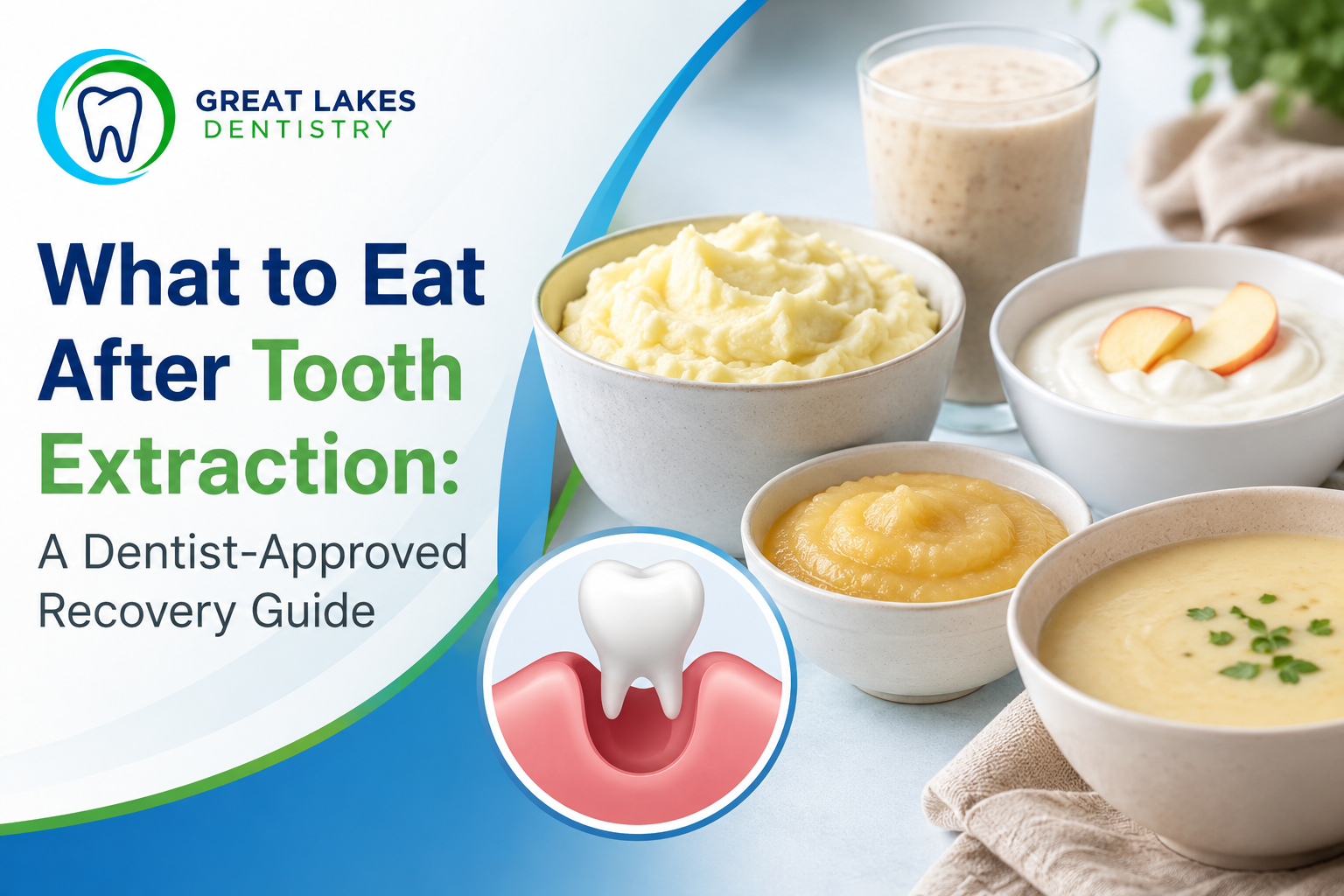
What you eat in the first week after a tooth extraction directly affects your healing speed and comfort
What to Eat After Tooth Extraction: A Dentist-Approved Recovery Guide
The hours and days right after a tooth extraction are the most important part of your recovery. What you eat during this window can be the difference between a smooth, comfortable healing process and a painful setback like dry socket. The good news is that a post-extraction diet does not have to mean bland soup for a week straight — there are plenty of nourishing, satisfying options that protect your extraction site while still tasting good.
Why Diet Matters So Much After an Extraction
Within the first few hours after a tooth is removed, your body forms a blood clot in the empty socket. That clot is essentially a natural bandage — it protects the underlying bone and nerve tissue and gives new gum tissue a scaffold to grow over.
If the clot is dislodged too early — whether from suction, chewing pressure, or the wrong foods — it can lead to a painful condition called dry socket, which delays healing and often requires an additional dental visit to manage. Choosing the right foods in the first week is one of the simplest and most effective things you can do to protect that clot and support a smooth recovery.
What to Eat Day-by-Day After a Tooth Extraction
First 24 Hours: Liquids and No-Chew Foods
Once the numbness from your local anesthetic wears off, stick to foods that require no chewing and no suction. Good choices include:
- Cool or room-temperature broth — sipped from a spoon, never a straw
- Plain yogurt
- Applesauce
- Mashed potatoes, cooled to room temperature
- Smoothies eaten with a spoon
Avoid hot foods and drinks during this window, since heat can interfere with clot formation. This is also when it matters most to avoid straws entirely — the suction can pull the clot right out of the socket.
Days 2 to 3: Swelling Peaks — Stay Soft
Swelling and discomfort typically peak around 48 to 72 hours after the procedure. Continue with soft, cool, or lukewarm foods such as:
- Scrambled eggs
- Oatmeal or cream of wheat, well cooled
- Pudding or gelatin
- Well-blended soups without chunky pieces
- Mashed avocado or banana
Chew on the opposite side of your mouth from the extraction site, and rinse gently with a warm saltwater solution after eating rather than swishing forcefully.
Days 3 to 7: Gradually Add Soft Solids
By day 3 to 5, new tissue starts to form over the socket and most patients can begin introducing slightly firmer soft foods, including:
- Soft-cooked pasta
- Well-cooked, mashed vegetables
- Soft fish
- Well-cooked rice — in small amounts, as grains can get trapped in the socket; many dentists recommend waiting until closer to day 7
- Soft bread, once your dentist confirms it is safe
Introduce new textures one at a time. If chewing near the extraction site causes pain, stop and wait another day or two before trying again.
Days 7 to 14: Returning to a Normal Diet
Most patients can return to a fully normal diet somewhere between 7 and 14 days, depending on the type of extraction. A simple extraction without stitches often allows a return to regular foods by day 7 to 10. Surgical extractions, impacted wisdom teeth, or sites that received stitches usually need the fuller 10 to 14 day window.
The clearest sign your socket is ready for normal chewing is that the gum tissue has visibly closed over the site — your dentist can confirm this at a follow-up visit. Our wisdom tooth extraction patients receive detailed post-operative guidance tailored to the longer recovery typically required after surgical removal.
Foods and Habits to Avoid After Tooth Extraction
- Straws — the suction can dislodge the clot and cause dry socket; avoid for at least the first week
- Crunchy or sharp foods — chips, popcorn, nuts, and raw vegetables can wedge into the socket or scrape the healing tissue
- Sticky or chewy foods — caramel, gum, and tough meats can pull at the clot
- Small grains and seeds — rice, sesame, and poppy seeds commonly become lodged in extraction sites
- Spicy, acidic, or very hot foods and drinks — these irritate the healing wound and can disrupt clot stability
- Carbonated beverages and alcohol — bubbles create pressure that can dislodge the clot; alcohol can interfere with healing and interact with pain medication
- Smoking — the suction and chemical irritation both significantly raise the risk of dry socket and delayed healing
Nutrition Tips to Support Faster Healing
Beyond simply choosing soft foods, a few nutritional habits can meaningfully support your body’s natural repair process:
- Prioritize protein — soft, protein-rich foods like eggs, yogurt, and blended soups support tissue repair and immune function
- Stay hydrated — drink plenty of water (no straws) to support circulation and healing throughout recovery
- Do not skip meals — your body needs consistent fuel to heal, even if appetite is reduced right after the procedure
- Keep food temperature moderate — very hot or very cold foods can both irritate a sensitive extraction site in the first 24 to 48 hours
Sample Meal Ideas for Each Stage of Recovery
Planning a few meals in advance takes the guesswork out of recovery — especially in the first day or two when you may not feel like cooking. Here are simple, practical combinations for each stage:
Days 1 to 3
Cool tomato-free broth sipped from a spoon. Plain yogurt with honey stirred in. Banana-and-yogurt smoothie eaten with a spoon. Scrambled eggs with mashed avocado. Blended vegetable soup. Soft mashed sweet potato with a little butter. Pudding or gelatin at room temperature.
Days 3 to 14
Soft-cooked pasta with a mild sauce. Flaky baked fish. Oatmeal with mashed banana. Well-cooked lentils. Soft sandwiches on fresh, non-crusty bread. Tender roasted vegetables. Soft-cooked chicken cut into small pieces. Well-cooked rice from day 7 onward.
Batch-preparing a few of these ahead of your procedure — especially the Day 1 and Day 2 to 3 options — means you won’t need to think about meal prep while your mouth is still tender.
Signs You Should Call Your Dentist
Most recovery is straightforward, but contact your dentist promptly if you notice any of the following:
- Severe pain that worsens after day 3, especially pain radiating toward the ear — a possible sign of dry socket
- A persistent bad taste or odour that does not resolve with gentle saltwater rinsing
- Bleeding that does not slow down with sustained gauze pressure
- Fever, or swelling that continues to worsen after 72 hours rather than gradually improving
If you are in recovery and experiencing any of the above, our emergency dentist team at Great Lakes Dentistry is available to assess and manage complications promptly — including dry socket treatment.
Preparing for an Upcoming Extraction
If you are preparing for an upcoming tooth removal, a little advance planning makes a meaningful difference in your recovery experience:
- Stock your kitchen with soft food staples before your appointment — yogurt, eggs, canned soups, mashed potato ingredients, applesauce, and ripe bananas
- Prepare and refrigerate 1 to 2 meals in advance so you have ready options on Day 1
- Fill any prescriptions for pain relief or antibiotics before your procedure so you’re not making pharmacy trips afterward
- Plan for a low-activity day after your appointment — rest directly supports healing
- Arrange your dental follow-up appointment before you leave the chair so the monitoring appointment is already booked
Our family dentistry team at Great Lakes Dentistry walks every patient through a personalized post-operative aftercare plan before they leave the clinic — so you always know exactly what to expect and what to do at each stage of your recovery.
Trusted Resources on Tooth Extraction Aftercare
- Canadian Dental Association — Oral Health Resources
- Health Canada — Dental Care Guidelines
- World Health Organization — Oral Health Facts
Questions About Your Tooth Extraction Recovery in Oakville?
If you are preparing for an extraction or currently in recovery and have questions, the team at Great Lakes Dentistry is here to help. Call us at (905) 825-1212 or book online — Dr. Gurpreet Mohi and our team are ready to support you at every stage.
Frequently Asked Questions: What to Eat After Tooth Extraction
How soon after a tooth extraction can I eat?
Most people can eat soft, no-chew foods once the numbness from the anesthetic wears off — usually within a few hours of the procedure. Wait until sensation has fully returned before eating to avoid accidentally biting your cheek or tongue. Start with cool or room-temperature soft foods only on day one.
Is ice cream a good choice right after extraction?
Not necessarily. While cold can help with swelling in general, very cold or very hard ice cream can cause thermal sensitivity right at the socket, and the licking or sucking motion can disturb the healing clot. Softer, room-temperature options like plain yogurt or applesauce are usually a better first-day choice.
When can I use a straw again after tooth extraction?
Most dentists recommend avoiding straws for at least 5 to 7 days after extraction, since the suction can dislodge the protective blood clot and lead to dry socket. When in doubt, always check with your dentist before reintroducing straws — particularly after surgical or wisdom tooth extractions which typically require a longer avoidance window.
What is dry socket and how do I know if I have it?
Dry socket occurs when the blood clot at the extraction site is dislodged or dissolves before the area has healed, leaving the underlying bone and nerve exposed. It typically causes sharp, worsening pain 2 to 4 days after extraction — often radiating toward the ear or jaw — sometimes with a bad taste or odour. If you suspect dry socket, contact your dentist promptly as it requires an in-office treatment to relieve pain and restart healing.
How long do I need to stick to soft foods after wisdom tooth removal?
Wisdom tooth extractions typically require a longer soft-food period than simple extractions — often 10 to 14 days — since the surgical site is usually larger and deeper. Always follow your dentist’s specific post-operative instructions, as healing time varies by case, the number of teeth removed, and whether stitches were placed.
Can I drink coffee or alcohol after a tooth extraction?
It is best to avoid hot coffee for at least the first 24 hours, as heat can interfere with clot formation. Alcohol should be avoided for the first 3 to 5 days — it can slow healing and interact with any pain medication you have been prescribed. When reintroducing coffee, ensure it is lukewarm rather than hot, and drink it from a cup rather than a straw.
Final Thoughts
- Protect the blood clot above everything else — no straws, no suction, no hot foods in the first 24 hours
- Stick to soft, cool or room-temperature foods for the first 3 days; gradually expand from days 3 to 7
- Most patients return to a normal diet by days 7 to 14 depending on extraction type and healing progress
- Protein-rich soft foods — eggs, yogurt, soft fish, blended soups — actively support tissue repair
- Worsening pain after day 3 is a warning sign — contact your dentist promptly if pain increases rather than improves
- Batch-prepare soft meals before your procedure to make the first 48 hours easier and stress-free